Through innovative design, specialised materials and proven techniques, GTM Engineering
applies value engineering to reduce cost and programme time without compromising quality or safety.
Our approach spans four core disciplines.
Value engineering in mechanical
Value engineering in structural steel works
Value engineering in ground improvement
Value engineering in civil works
Discipline 01
Mechanical
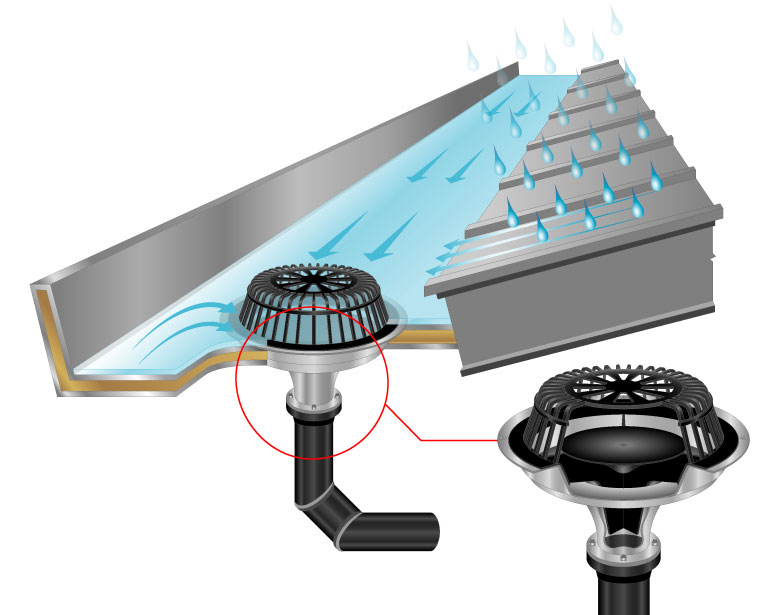
Rainwater siphonic
Innovative design, construction and use of specialised material.
Siphonic rainwater outlets with an anti-vortex device that restricts the entry of air into the
system to create a full-bore flow, with water flowing under negative pressure.
The siphonic system is 10 times faster and more efficient than a conventional gravity system.
Performance louvre
Innovative design and in-house manufacturing of performance louvres.
Performance obtained is as per the industry standards.
Performance louvres are classified by their performance to rain defence and air flow.
As per HEVAC standards, the louvres are classified according to:
Rain defence performance
Air flow performance
Discipline 02
Structural
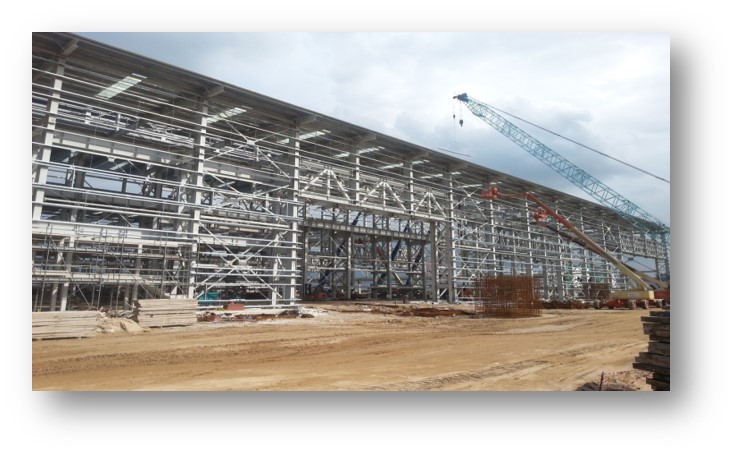
Pre-engineered building
The frame geometry of a pre-engineered building matches the shape of the internal stress diagram,
thus minimising material wastage and reducing the total steel weight.
The material saving is between 30% and 40% of a conventional building.
Discipline 03
Ground improvement
Deep vibro technique
Various ground improvement techniques are proposed on the project, giving time and cost savings.
Deep vibro compaction and replacement, together with the PVD technique, is able to replace
conventional driven piles.
This technique is applicable for storage tanks, pipe rack foundations, process plants, warehouses
and roads.
Discipline 04
Civil
Steel fibre concrete
Steel fibre reinforced concrete is a composite material comprising Portland cement, fine aggregate,
coarse aggregate, water and steel fibres.
Randomly distributed discontinuous fibres help to bridge across the cracks that develop post-cracking
(“ductility”).